A premise-level world guide
The imagined traditions of The Word of Era
Explore the premise of a fictional religious text drawn from the imagined Eranian civilizations of Haedo’s fiction.
Reading the imagined traditions of The Word of Era
Treat this fictional religious text as part of an invented civilization and read its claims critically.
AI-prepared editorial guidance, checked against the website’s source records. Interpretation is distinguished from book facts; this is not the author’s personal commentary.
Spoiler-light introduction. This complements the source books and does not reproduce their text.
Published premises and original editorial interpretation ·
Eranianism and The Word of Era are fictional religious lore used to explore villains and oppressive civilizations. Their harsh views are not Paul Haedo’s personal beliefs.
Synthetic voice provided by your browser; availability and processing depend on your device and settings.
An in-world form
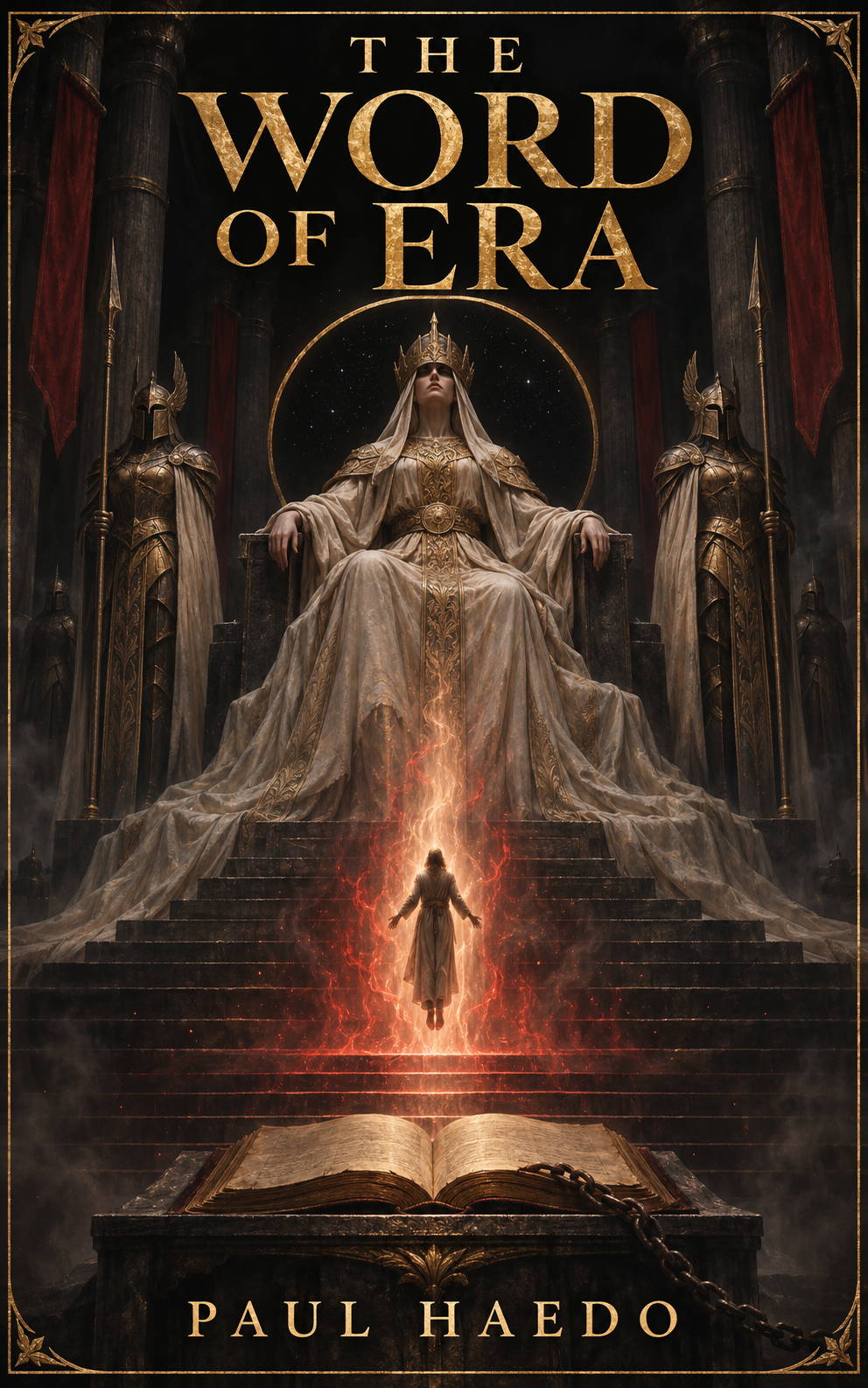
The Word of Era presents the religious traditions of imagined Eranian civilizations through tales involving gods, conflict, hope and collective life. Its form lets readers encounter a fictional culture’s claimed authority. It should not be read as an announcement of Paul Haedo’s own religious or moral views.
Why context matters
The author uses Eranianism to explore villains and oppressive civilizations. Harsh content therefore requires its fictional frame to remain visible. A critical guide can examine the rhetoric of authority and belonging without reproducing directives, adopting their assumptions or turning them into a statement aimed at readers.
Questions rather than a replacement text
Ask who is speaking, how legitimacy is claimed and what a reader is invited to accept. These questions help distinguish representation from endorsement. The introduction does not reproduce the scripture, reconstruct its entire doctrine or claim to define new canon for the author’s worlds.
Questions for your reading
Source books
Continue exploring
- Reading fictional scripture critically
- Fictional beliefs and an author’s beliefs
- The Word of Era: form, voice, and critical reading
- Reading an imagined scripture: form and voice in The Word of Era
- Authority and its boundaries: a critical approach to The Word of Era
- Origin stories and institutional claims in fictional worlds
About this guideAn introductory guide based on author-approved summaries of published book descriptions and confirmed collection metadata. Entries cover published premises; they are not a full-text canon reference.
A text within an imagined civilization
The Word of Era presents religious material from imagined Eranian civilizations. It offers a way into fictional beliefs and traditions through the form of a religious text.
Read in: The Word of Era
Tales of rival gods
Tales of rival gods and conflict form part of the fictional religious text. These stories develop the beliefs and traditions of its imagined Eranian civilizations.
Read in: The Word of Era
Hope and collective empowerment
Hope and collective empowerment accompany the text’s tales of conflict. Together, these subjects provide an introduction to its imagined religious traditions.
Read in: The Word of Era
Inside the manuscripts
Questions for your reading
What do the named places, institutions, or people make possible in this premise? After reading, separate what the text establishes from your interpretation.
Published descriptions
The introductory details above are grounded in the approved summaries of these book listings.
Explore the source books.